

















The rise of social media has caused trends to rapidly go in and out of style faster than ever, many people try to keep up by buying from fast fashion companies for their cheap prices. However, when those clothes go out of style so quickly, what happens? People who give them to thrift corporations assume they will be going back into a cycle of reusing clothes, but when everyone is donating clothes no one wants at the same time what happens to them? When does ‘more’ really become enough, and how can we fix it?
The Illusion of Sustainability
When more becomes enough it’s already too late, the planet has already paid the prices people have paid to purchase/support unethical fast fashion companies. Author, Aja Barber writes about this in her book “Consumed”. Barber is a sustainability consultant and writer, she advocates for issues in the fashion industry and how to solve them. “Every consumer has the right to know who produces their clothing and under what conditions, whether it be labor conditions or environmental, just like the ingredients written on the food packaging that you buy.” Fast fashion employees are oftentimes not paid the proper wages, overworked and endure unsafe working conditions. No piece of clothing can be made entirely by machine, it’s shocking how something made by humans can be so inhumane.
Chasing Trends, Losing Choice
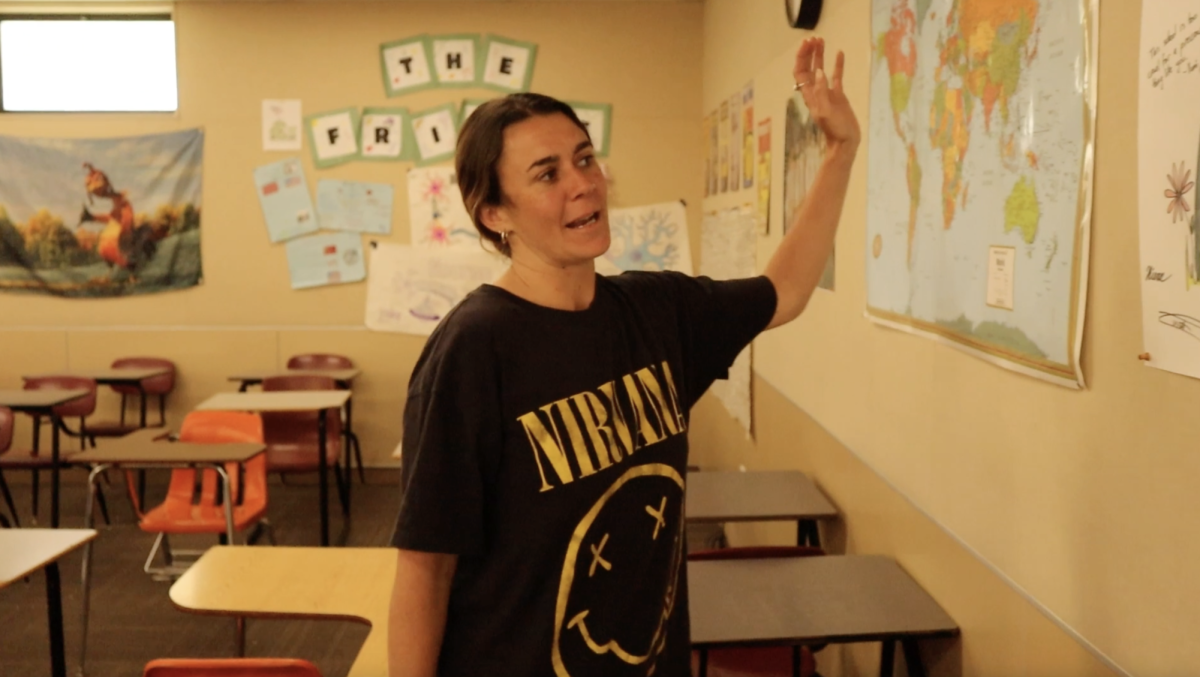
Fast fashion is powered by microtrends, and they move fast. It’s difficult to keep up or even tell if you like them or are trying to assimilate to others and fit in. When local librarian tech, Syd Pruitt, was asked about her opinion on microtrends, she had this to say, “I worry that [clothes] cannot be made faster. You can’t do that quickly so I just don’t think it is good to participate in micro trends or even acknowledge them really, especially brands, I feel like that’s so strange.” When you realize the trend is outdated, you give the clothes away to a second hand store, but many of those clothes don’t get bought and end up being sent to landfills.
Where Does It All Go?
Many secondhand store companies are misleading. They make themselves look sustainable, when in reality their clothes are ‘donated’ to landfills, ruining the surrounding environment. Barber writes “We cannot allow circularity to end up as another greenwasher marketing ploy.” According to Waste360, in Chile’s Atacama Desert, lies over 66,000 tons of clothing in a landfill that is visible from space. We don’t have room on our planet for these ethical clothes and we shouldn’t continue supporting the companies that contribute to this. According to a documentary from 2015 titled “The True Cost”, the average American produced 82 pounds of textile waste a year, this source was published over ten years ago. Who knows how much this statistic has changed today? With business booming in fast fashion corporations, the growing numbers are an unimaginable, chilling thought.
The Algorithm Is Selling You More Than Clothes
Social media has skyrocketed purchasing from fast fashion companies, you cannot scroll for one minute without an advertisement being there. Most advertisements are hidden in plain sight when creators are sponsored to promote a product. Not only are there advertisements that you aren’t even aware of, brands no longer have to market themselves, social media does that for them. Influencers will talk about how people ”Need to run” to a certain store to buy from their new collection of clothes that will be replaced and forgotten about by next month. These videos that influencers make often include prices saying how it’s only a specific price, encouraging people to buy it to get a good deal. Many social media apps, like TikTok, have a shopping option to profit off of the fact that people are so easily influenced to purchase items they don’t need, but are under the impression that they do need. Advertisements are pushing and promoting the purchase of unnecessary products while the advertisements start creating themselves while people keep consuming.
Style vs. Sameness
With fast fashion trends, there is a significant loss in individuality. These companies encourage conformity, buying from the same brands, the same style of clothing and the need to keep up with every new microtrend. Instead of curating a wardrobe full of clothes that express a person’s self, people will buy from the same brands, the same staples of clothing. With these choices, a loss of self expression occurs. When Atascadero High School student, Reese Lenz was asked about this issue, they responded with, “Thrifting influences my personal style through a lot of creative influence that I get to have with modifying and adding better details to clothes, it also helps me find a lot of materials for costumes which I like to do a lot as well.” Creativity is lost nowadays but with people keeping clothing out of landfills and using them to fuel creativity we can inspire others to do the same.
Rethinking the Cycle
Not everything is as it seems in the realm of fast fashion purchasing, and this is true as well in the misconstrued sustainability of second hand stores. We feel the need to buy and buy and replace as soon as we can. We want to buy what everyone else is buying just so we can have it. ‘More’ becomes enough when you realize what ‘enough’ has become. It becomes lost individuality, constant advertisements. ruined environments, pointless production of products that are destined for landfills. ‘More’ is more than enough.