










A book ban is often a touchy subject when it comes to what is and is not allowed in schools, but the process of banning books is often not thought about. There is often, if not always, a process that must be gone through in order for a book to be “banned” or “challenged”. Since 2023, The California Freedom to Read Act AB 1078 makes it impossible to ban a book but challenging one is still an active practice.
“[Book bans] diminish the quality of education students have access to and restrict their exposure to important perspectives that form the fabric of a culturally pluralist society like the United States,” explains Sonya Douglas, the Professor of Education Leadership at Columbia University.
People often misunderstand book bans, thinking that a book becomes suddenly unavailable to everyone. That is not the case. While the California Freedom to Read Act prohibits school districts from banning or refusing to approve textbooks and other instructional materials, many states ban books in schools but you can still find them on your own.
Across the nation, when it comes to the types of books often banned, PEN America statistics state that:
59% address grief and death, 40% address substance use/abuse, 38% address empowerment and self-esteem, 57% included sex/sex-related topics and content, 44% included characters/people of color, and 39% included LGBTQ+ characters/people. Of the books that are often banned 60% are written for a young adult audience.
When it comes to students’ education, banning books has many effects on the students. Mr. Winther, English teacher at Atascadero High School, stated that, “[Book bans] don’t allow the entirety of our country or of our people to recognize the differences and qualities that everyone has when they’re not offered the voice of those people.” -Mr Winther
When asked how book bans affect what teachers may discuss, Winther shared that they do not affect what they can discuss as long as it is done in an unbiased manner. Additionally, all sides must be equally represented, without the educator taking sides with one opinion over another. “In an English course, where we are trying to create critical thinkers, we develop an understanding that, you know, these topics need to be discussed.”
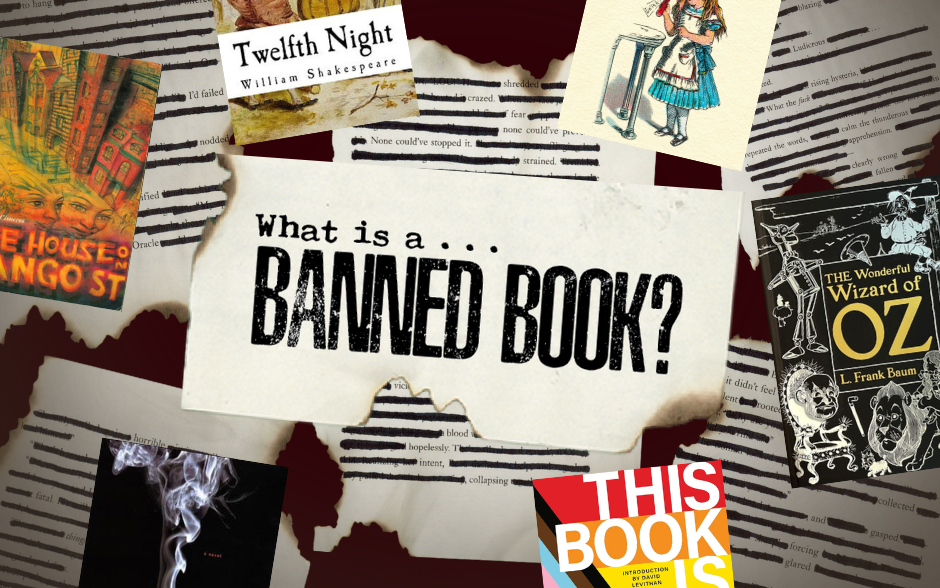
There are several books that have been banned in other districts, which would be easily recognizable. Looking for Alaska, a young adult novel by John Green (rated for ages 14 and up), was banned in the Escondido Union School District in California. This district also banned This Book is Gay by Juno Dawson (rated for ages 14-17). The School District reversed its ban after the California Freedom to Read Act in 2023.
While book bans have become increasingly discussed in the media, they have existed for quite some time. According to the ALA in the 1960s, several institutions decided that Alice’s Adventures in Wonderland and Through the Looking Glass needed to be banned due to the underlying promotion of hallucinogenic drugs. Alice in Wonderland is not the only well-known children’s book to have been banned. The Wizard of Oz has also been on a banned book list. The book was banned in various US states during the twentieth century due to its portrayal of a strong female character, use of magic, promotion of socialist values, and attribution of human characteristics to animals.
The California Freedom to Read Act AB 1078 prohibits school districts from banning books that include diverse perspectives on topics like race, gender, sexual orientation, and religion.
While the Atascadero school district makes it a point to represent as many different cultures and demographics as possible, and adheres to the California Freedom to Read Act, it is always important to be aware of when other areas ban books.
“Stories are so important. Stories are the way that we connect with each other as human beings ” -Ms. Bell, Atascadero District Librarian.